Noisy Garage Door Repair in Schaumburg, IL
A garage door that squeaks, grinds, or bangs every time it moves isn't just annoying — it's telling you something is wearing out. We find the real cause and fix it, not just mask it.
- Locally owned since 2011
- Insured, background-checked techs
- Free upfront quotes
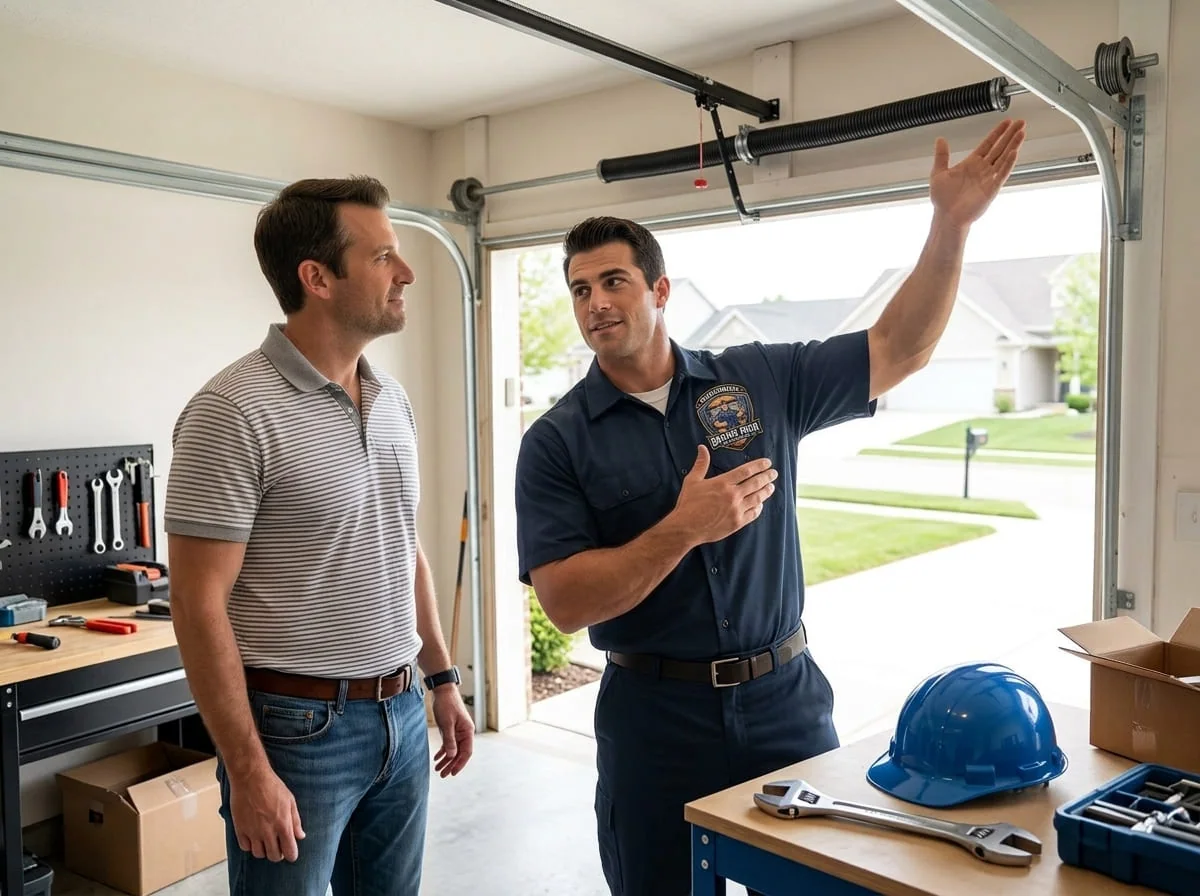
If your garage door has gone from a quiet hum to a squeal, a grind, or a metallic bang every time it opens, something in the system has worn past the point where a squirt of lubricant fixes it for good. Noise is usually the first symptom a garage door gives you before a part actually fails — worn rollers, loose hardware, a stretching spring, or an opener drivetrain on its way out all announce themselves with sound before they leave you stuck.
We get calls across Schaumburg for the same handful of noises: a rhythmic squeak on every roller pass, a loud bang at the top or bottom of travel, a grinding opener motor, or rattling that seems to come from everywhere at once. Each of those points to a different part of the door, and diagnosing it correctly the first time is the difference between a quick fix and a return trip.
Schaumburg Garage Door Repair Group has been running down noisy garage doors since 2011, from the older ranch-style homes in Weathersfield to newer construction throughout the village. We show up, listen to the door actually run, find the source, and give you a free upfront quote before any work starts — no guessing, no unnecessary parts.
Common Signs Your Garage Door Is Too Noisy
Every garage door makes some sound, but there's a difference between normal operation and a door that's telling you it needs attention. Pay attention if you notice:
- A rhythmic squeak or squeal that repeats with every roller as the door travels
- A loud metallic bang at the very top or bottom of the door's travel
- Grinding or whining coming from the opener motor itself
- Rattling or clanking along the track, especially on older sectional doors
- A sudden increase in noise after months of quiet, normal operation
None of these are things to just live with. A door that's gotten noticeably louder over a few weeks is usually a part actively wearing down, not settling into a new normal.
What's Actually Causing the Noise
Most noisy garage doors trace back to one of a handful of causes. Worn or dry rollers are the most common — nylon rollers wear out over years of use and start grinding against the track instead of rolling smoothly through it. Loose hardware is a close second: bolts, hinges, and brackets work themselves loose from thousands of open-close cycles and start rattling or banging.
Beyond that, a stretching or failing torsion or extension spring can produce a distinct creak or groan as it loses tension unevenly, and a misaligned track will cause rollers to bind and grind rather than glide. If the noise is coming specifically from the motor unit rather than the door itself, that usually points to an aging opener drivetrain, especially on older chain-drive units.
Why DIY Noise Fixes Can Backfire
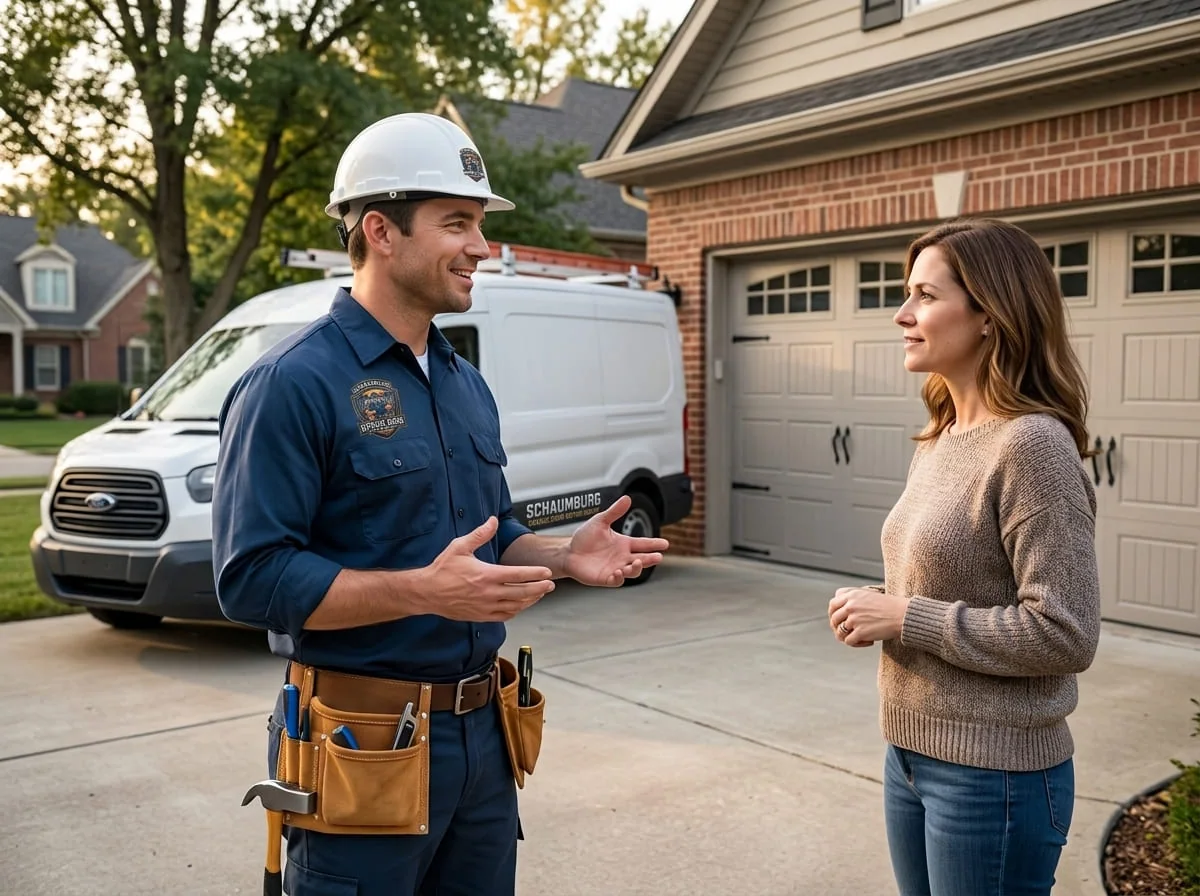
It's tempting to grab a can of household spray lubricant and call it done, but that's often where DIY noise fixes go wrong. The wrong lubricant (or too much of it) attracts dust and grime that makes rollers and hinges worse over time, not better. And if the noise is actually coming from worn rollers or a spring under tension, tightening the wrong bolt or attempting a spring adjustment yourself is a genuine injury risk — torsion springs in particular store enough force to cause serious harm if handled without the right tools and technique.
Loose hardware also isn't always obvious from the ground. A bracket that looks fine can be the exact one rattling loose 12 feet up, and tightening the wrong fastener on a moving door can throw the whole panel out of alignment.
How Schaumburg Weather Adds to the Noise
Chicago-area winters are hard on garage door hardware. Cold temperatures make metal components contract, which can tighten tolerances between rollers and track just enough to turn a minor wear issue into an audible grind. Road salt and moisture tracked in on tires accelerate rust on hinges, springs, and track hardware, and dried-out factory lubricant gets even stiffer in freezing temperatures. That's part of why we see a real jump in noise-related service calls every fall as homeowners notice a door that was fine all summer suddenly grinding once the weather turns.
Our Noisy Garage Door Repair Process
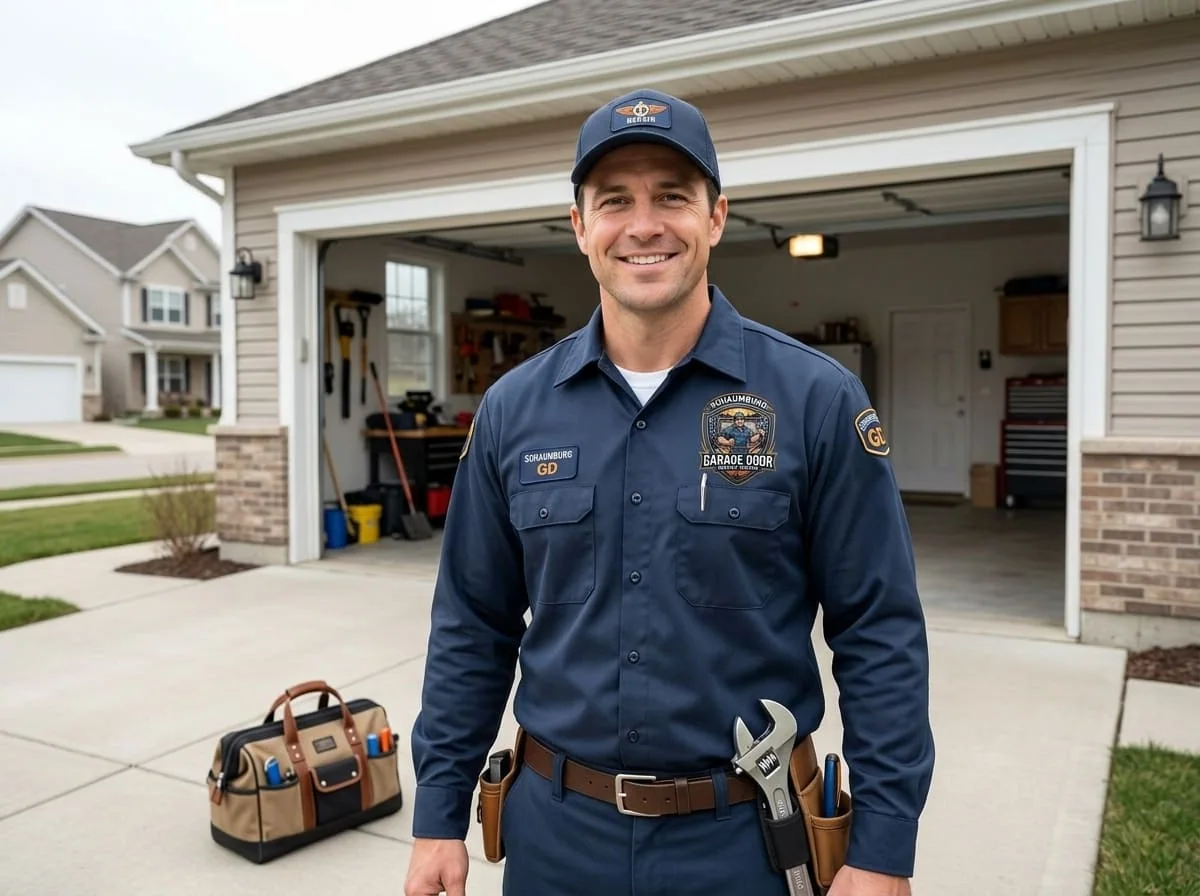
We don't just lubricate whatever's closest and leave. On every noise call, we run the door through a full cycle, listen for exactly where and when the sound occurs, and inspect rollers, hinges, track alignment, spring condition, and opener hardware in sequence. Once we've isolated the actual source, we walk you through what we found and what it'll take to fix before touching anything, per our free upfront quote policy.
Why Schaumburg Homeowners Choose Us for Noise Repairs
I started this company in 2011 after years doing commercial door and opener service around the Elk Grove Village Business Park, where same-day response was standard because it was written into the contract. Homeowners deserved the same treatment, so that's what we built here on Lunt Ave. Every technician on my crew is insured and trained personally by me, we give same-day scheduling where the day allows, and we tell you what's actually wrong with your door instead of guessing. You can read more about how Schaumburg Garage Door Repair Group got started, or just call the shop directly.
What to Expect When You Call
Describe the noise
Tell us when and where the sound happens — opening, closing, or constantly — so we arrive ready to check the right parts first.
Full-cycle inspection
We run the door through a complete open-close cycle, checking rollers, track alignment, hardware, springs, and the opener in sequence.
Free upfront quote
Once we've pinpointed the cause, we explain it plainly and quote the fix before any work begins — no surprises.
Repair and test
Most noise repairs are completed the same visit, and we run the door through several full cycles afterward to confirm it's actually quiet.
Noisy Garage Door Repair in Schaumburg, IL FAQs
Why did my garage door suddenly get so loud?
A sudden jump in noise almost always means a part has crossed from worn to failing — commonly rollers, hinges, or a spring losing tension. Cold weather often accelerates this, which is why we see more noise calls in fall and winter.
Is a noisy garage door dangerous?
It can be, depending on the cause. Grinding from a stressed spring or a loose track bracket is a sign of a part under strain that could fail suddenly, so it's worth having it checked rather than waiting.
Can I just spray lubricant on it myself?
Light maintenance lubrication is fine between service visits, but if the noise persists after lubricating, that usually means the cause is wear or misalignment that lubricant alone won't fix.
How much does it cost to fix a noisy garage door?
It depends entirely on the cause — a roller replacement is very different from a spring or opener repair. We always give a free upfront quote once we've diagnosed the actual issue, before any work starts.
Will a noisy opener need to be fully replaced?
Not always. Many noisy openers just need drivetrain service or hardware tightening. We only recommend replacement when the unit is genuinely at the end of its service life.
How long does a noise repair usually take?
Most noisy garage door calls are diagnosed and repaired in a single same-day visit once we've identified the source.
Does cold weather really make garage doors noisier?
Yes. Metal components contract in cold temperatures, dried lubricant stiffens, and road salt accelerates hardware corrosion — all of which show up as more noise once winter sets in.
Need Noisy Garage Door Repair in Schaumburg, IL?
Schaumburg Garage Door Repair Group is ready to help — call now for a free, upfront quote.