Garage Door Opener Repair in Schaumburg, IL
A door that won't open with the push of a button isn't just an inconvenience — it can leave your car trapped and your home exposed. We diagnose and repair chain-drive, belt-drive, and jackshaft openers with same-day scheduling where the day allows.
- Locally owned since 2011
- Insured, background-checked techs
- Free upfront quotes
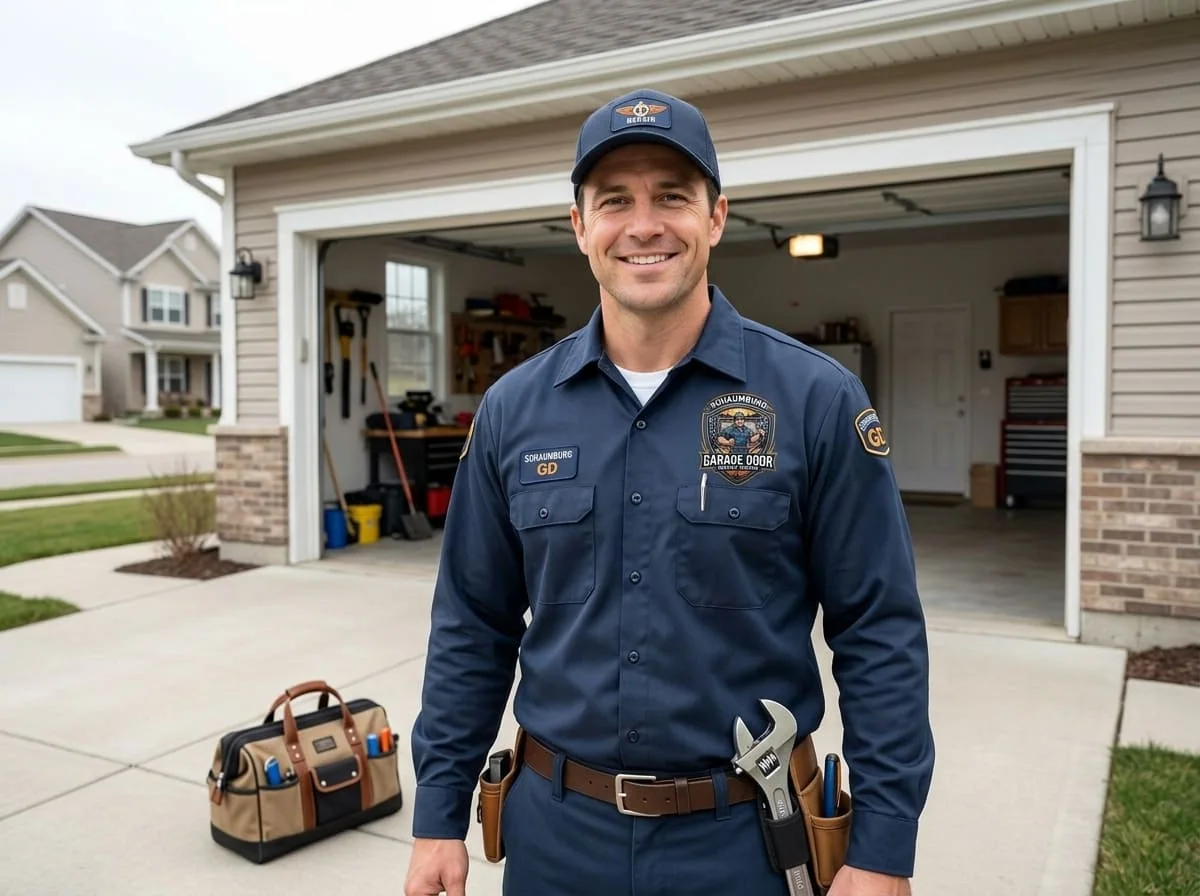
When a garage door opener starts acting up, most homeowners assume the whole unit is shot and start pricing a replacement. In a lot of cases that's not true — a stripped drive gear, a worn sprocket, a misadjusted travel limit, or a failing circuit board can leave an otherwise good motor unit dead in the water, and those are repairable problems, not replace-the-whole-unit problems.
We work on all three drive styles you'll find in Schaumburg garages — chain-drive, belt-drive, and jackshaft units mounted directly to the torsion shaft above the door. Each has its own failure points, and diagnosing which one you've got wrong leads to wasted time and, sometimes, a worse problem than you started with.
Our shop is on Lunt Ave in western Schaumburg, not far from the Elk Grove Village line, and opener calls are one of the most common reasons homeowners in Weathersfield, Hoffman Estates, and the rest of the northwest suburbs call us. We'll get a technician out, diagnose the actual failure, and give you a free upfront quote before any repair work starts.
Signs Your Opener Needs Repair, Not Replacement
Most opener failures give you a warning before they quit entirely. Watch for these:
- Grinding, clicking, or straining noises from the motor unit that weren't there before
- The door reverses partway before it reaches the floor, or won't close at all
- The remote or wall button works sometimes but not consistently
- The motor runs — you can hear it — but the door doesn't move, which usually points to a stripped gear or a disconnected trolley
- The travel or force settings seem to have drifted, so the door stops short or slams harder than it used to
- Blinking status lights or an error code on the unit's diagnostic display
Any one of these on its own is usually a repair, not a full opener swap. It's when several show up together, or the motor is old enough that parts are hard to source, that replacement starts making more financial sense — and we'll tell you honestly which situation you're in.
Chain-Drive, Belt-Drive, and Jackshaft Opener Problems We Fix
Chain-drive openers are the most common and most affordable style, but the metal chain and drive gear take a lot of wear over years of use — stripped plastic gears and worn sprockets are the most frequent failure we see. Belt-drive units run quieter and put less strain on the drive mechanism, but the rubber belt itself can stretch, fray, or slip off its pulley over time, and we re-tension or replace belts as part of a repair call.
Jackshaft openers mount directly to the torsion shaft above the door instead of running along a rail on the ceiling. They're common on garages with limited ceiling clearance or finished ceilings, and because the unit is tied directly into the torsion spring system, problems with the springs or cable drums can look like an opener problem when the failure is actually mechanical. That's part of why we always inspect the whole door system on an opener call, not just the motor unit — see our broken spring repair page for more on how spring tension interacts with the rest of the door.
Why DIY Opener Troubleshooting Is Risky
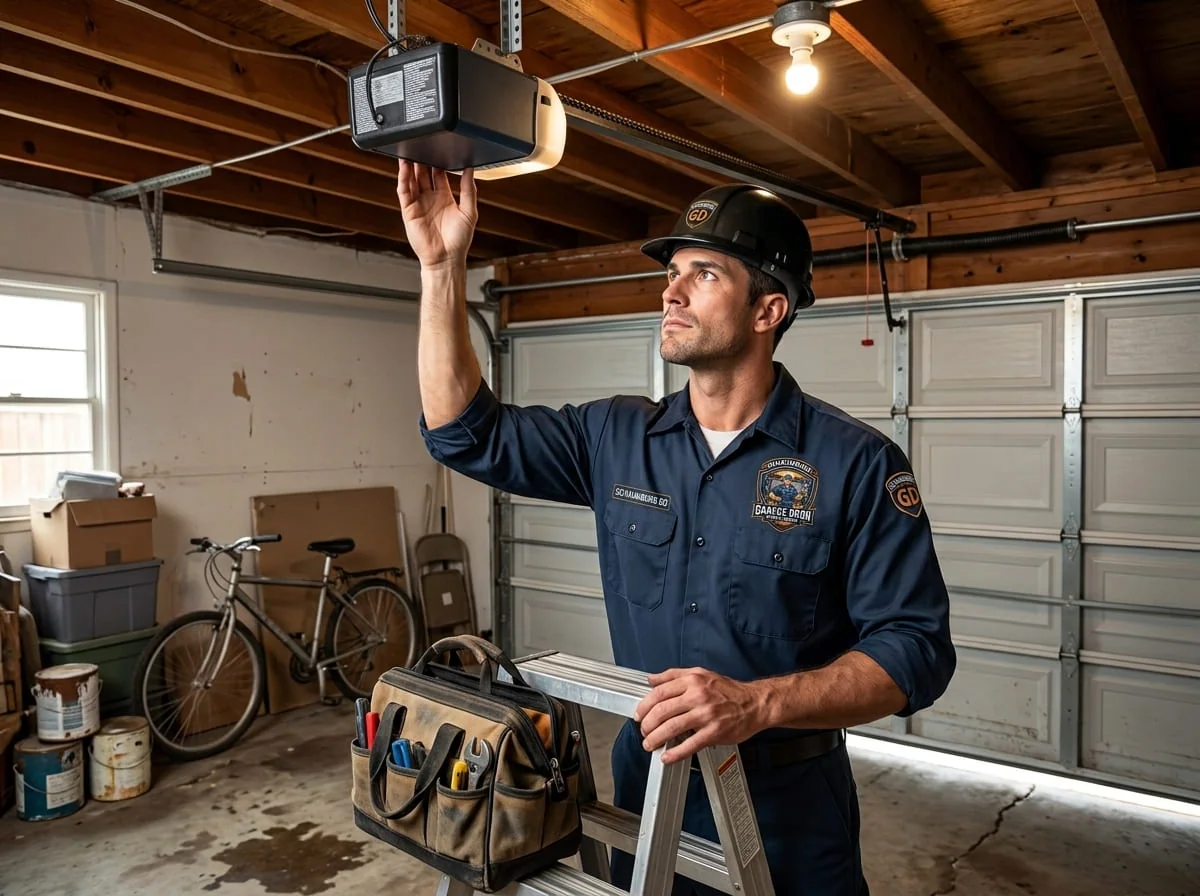
YouTube makes opener repair look simple, and sometimes it is — replacing a remote battery or reprogramming a keypad is genuinely a homeowner job. But a lot of opener problems intersect with parts of the door system that aren't safe for an untrained person to work on. Force and limit settings that get adjusted wrong can cause a door to close with too much pressure, which is exactly the kind of malfunction the safety-reversal system is supposed to prevent. Jackshaft units and any opener work that puts you near a torsion spring or cable drum under tension carries real injury risk if you don't know what you're doing.
There's also a diagnostic cost to guessing. Swapping in a new logic board or a full opener unit when the actual problem was a $20 gear or a loose wire harness means you've spent money and still have to deal with the real issue. A proper diagnostic identifies the actual failure point before anything gets replaced.
How Schaumburg Winters Affect Garage Door Openers
Cold weather is hard on openers in ways that aren't obvious until something fails. Grease and lubricant on the drive gear and rail thicken in low temperatures, which makes the motor work harder every single cycle — that added strain is a common reason chain-drive gears strip in January and February rather than July. Temperature swings between a heated garage and single-digit nights also work mounting bolts and bracket hardware loose over a season, which can throw off the alignment the opener depends on to run smoothly.
Condensation and ice buildup around the safety sensors near the bottom of the track is another cold-weather issue — a sensor that's iced over or knocked out of alignment will stop the door from closing at all, which some homeowners mistake for a motor problem when it's really a simple sensor fix. We cover this in more detail on our guide to chain, belt, and wall-mount openers if you're trying to figure out which style holds up best for your garage.
Our Garage Door Opener Repair Process
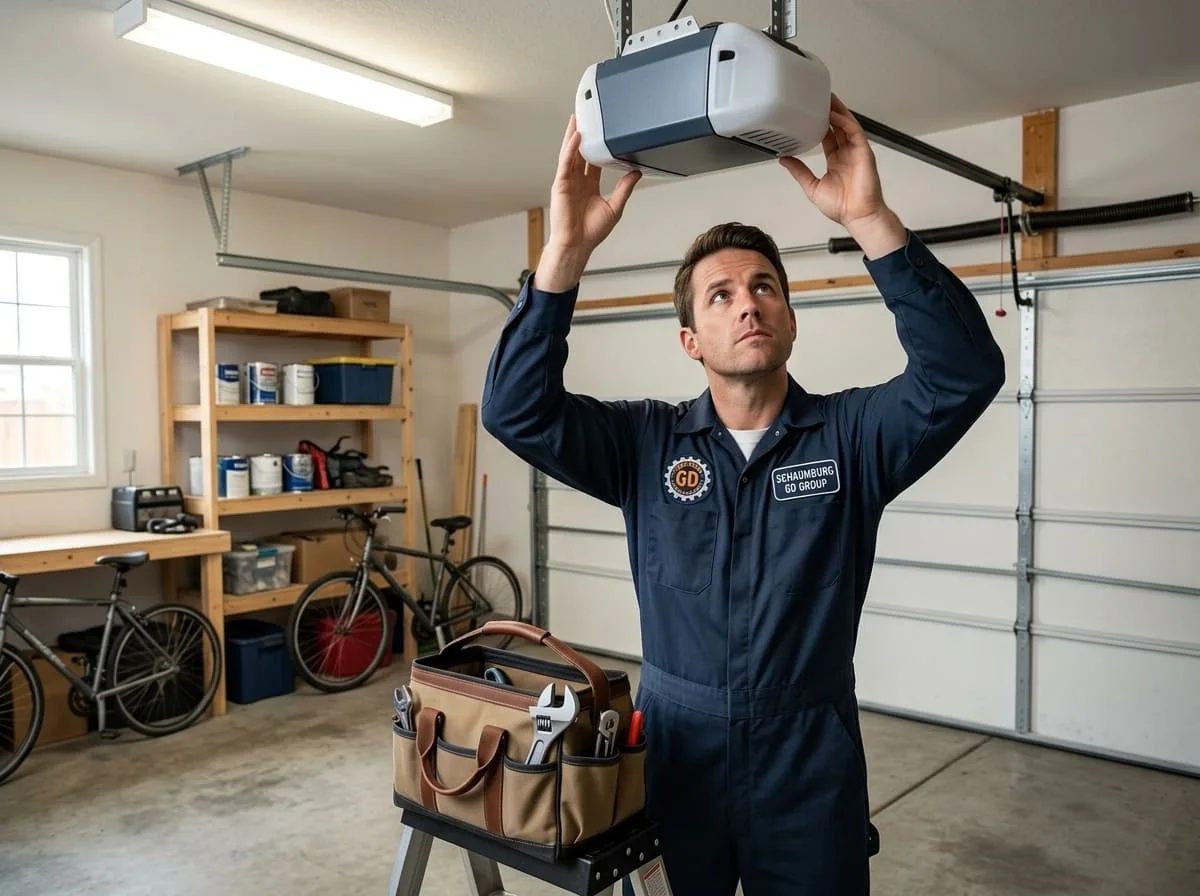
Every opener call starts with a real conversation, not a generic dispatch. Here's what to expect:
- You describe the symptoms when you call — noise, no movement, inconsistent remote, reversing door — and we get a rough sense of what we're dealing with before the truck even leaves
- On-site diagnostic covering the motor unit, drive mechanism, safety sensors, and force/limit settings, plus a check of the springs and cables since opener problems often trace back there
- A free upfront quote once we know exactly what's failed, before any repair work starts
- Repair, adjustment, and a full-cycle test to confirm the door opens, closes, and reverses correctly on the safety sensors before we leave
Why Schaumburg Homeowners Call Us for Opener Repair
I started this company in 2011 after years spent servicing commercial overhead doors and openers on contract, where same-day response was just part of the deal. I saw homeowners a few miles away waiting days for a callback from the bigger outfits on the exact same kind of repair, and that gap is what got me into this business. Same-day scheduling where the day allows, a free upfront quote, and a technician who actually knows the difference between a chain-drive gear failure and a jackshaft spring problem — that's the standard I hold myself and my crew to on every opener call. You can read more about how we got started on our about page.
If your opener is acting up and you're in Weathersfield, Hoffman Estates, or anywhere else in the northwest suburbs we cover, give us a call and we'll get it sorted.
What to Expect When You Call
Describe the problem by phone
Tell us what the opener is doing — noise, no movement, reversing door, dead remote — so we arrive prepared.
On-site diagnostic
We test the motor, drive mechanism, safety sensors, and force settings, plus the springs and cables that opener problems often trace back to.
Free upfront quote
You get a clear, no-surprise quote once we know the actual cause — before any repair work begins.
Repair and full-cycle test
We complete the repair and run the door through a full open-close cycle to confirm the safety reversal system is working correctly.
Garage Door Opener Repair in Schaumburg, IL FAQs
Can a garage door opener actually be repaired, or does it always need to be replaced?
Most opener problems — stripped gears, worn sprockets, loose belts, misadjusted force settings, bad sensors — are repairable. Full replacement usually only makes sense when the motor itself has failed or the unit is old enough that parts are hard to find.
Why does my opener motor run but the door doesn't move?
This almost always points to a stripped drive gear, a broken chain or belt, or a trolley that's disconnected from the carriage. The motor spinning freely without resistance is the giveaway.
What's the difference between chain-drive, belt-drive, and jackshaft openers?
Chain-drive units use a metal chain and are the most common and affordable; belt-drive units use a rubber belt and run quieter; jackshaft units mount to the side wall on the torsion shaft itself instead of running along the ceiling, which suits garages with low clearance.
Why does my garage door reverse right before it closes?
This is usually a safety sensor alignment issue, a force/limit setting that's been knocked off, or debris in the track — the opener is doing exactly what it's designed to do when it senses an obstruction, even a false one.
Is it safe to keep using an opener that's grinding or hesitating?
Not for long. A grinding gear or a hesitating motor is usually a sign of a part close to failing completely, and continuing to run it can strip the mechanism further or leave the door stuck partway open or closed.
How long does a typical opener repair take?
Most opener repairs are completed in a single visit once the technician is on-site and has diagnosed the actual cause, though the exact time depends on what parts need to be replaced.
Do you work on jackshaft openers mounted to the torsion shaft?
Yes — jackshaft units require checking the torsion spring and cable system as part of the diagnostic, since problems there can present as opener issues.
Need Garage Door Opener Repair in Schaumburg, IL?
Schaumburg Garage Door Repair Group is ready to help — call now for a free, upfront quote.