Garage Door Won't Close: A Diagnostic Walkthrough
When a Schaumburg homeowner calls and says the door just won't close, I run through the same sequence every time. Here's that sequence, in order, so you can find the problem before you call.
Why 'Won't Close' Isn't One Problem
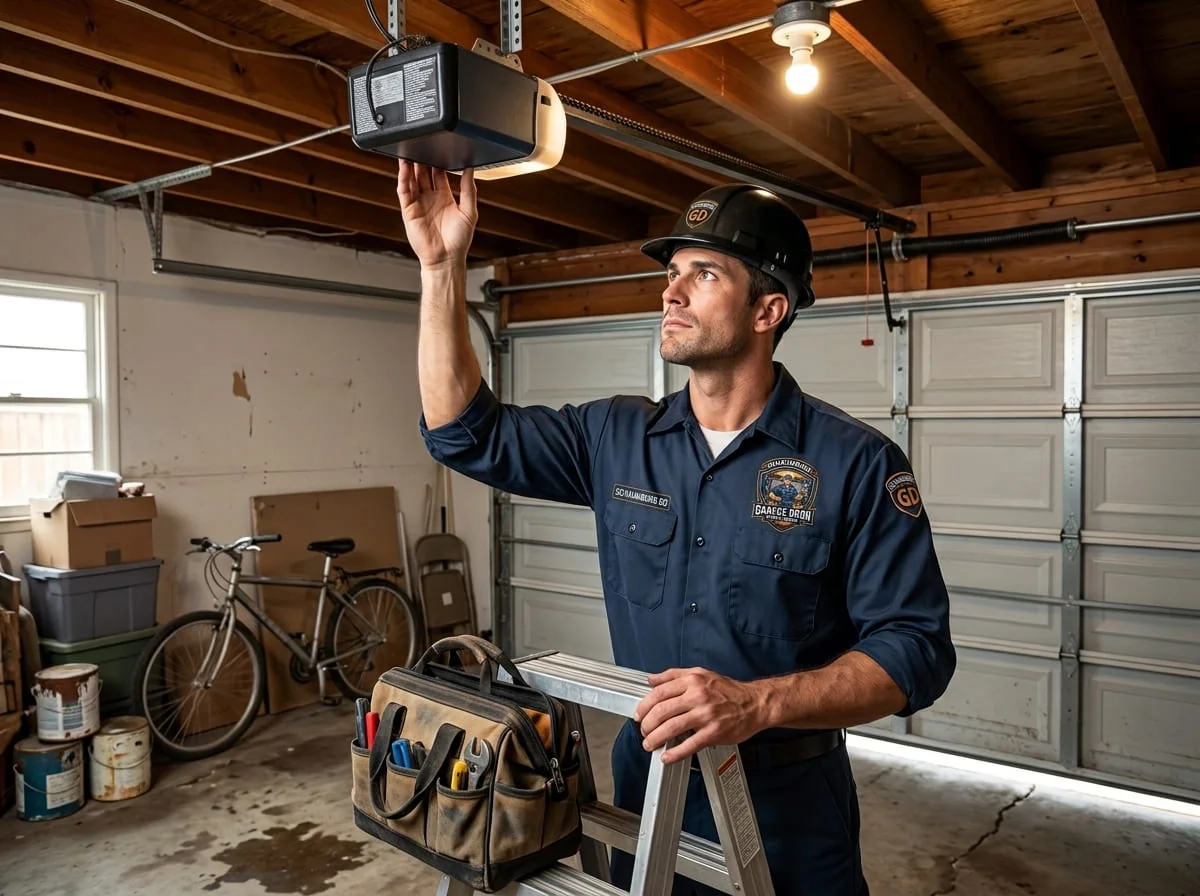
I get some version of this call almost every week: someone hits the button, the door starts down, and either it stops a few inches from the floor and reverses, or it never moves at all and the opener just hums or clicks. In my experience, "the door won't close" is really five or six different failures that all look the same from where you're standing in the driveway. The opener doesn't know why it's refusing to close - it just knows its safety logic tripped, or its travel limit is wrong, or the mechanical system underneath it is binding. My job on every one of these calls is to work through the possibilities in a specific order, because guessing at the wrong one wastes a visit and sometimes makes the real problem worse.
I've been running this same sequence since I started this company in 2011, back when I was still doing the diagnostic work solo (you can read more about how that got started if you're curious). What follows is the actual sequence I run through on a service call, roughly in the order I check it, starting with the single most common cause and working down to the ones that mean you need a technician rather than a screwdriver. I'll flag which steps are safe to do yourself and which ones aren't - a garage door system carries a lot of stored energy in its springs and cables, and some of these checks are genuinely dangerous to do wrong.
Step 1: Check the Safety Sensors First
Nine times out of ten when a door won't close but opens fine, the cause is the pair of photo-eye sensors mounted a few inches off the floor on each side of the track. These sensors shoot an infrared beam across the opening, and if anything breaks that beam - a bike leaning against one, a box that got shoved in front of it, spider webs, or even direct sunlight hitting the receiver at a certain angle in late afternoon - the opener refuses to close as a safety measure. This has been federally required on residential openers since 1993, and it's the single most common reason for a "won't close" call I get.
Here's what I check, and what you can check yourself before calling anyone:
- Look at the small LED light on each sensor. Most units show solid light on both when aligned correctly, and a blinking or dark light on one side means it's out of alignment or blocked
- Clear anything sitting between the two sensors, including anything leaning against either bracket
- Wipe the lens on both sensors - dust and cobwebs are a surprisingly common culprit in garages that don't get swept often
- Check whether one bracket has been bumped or rotated even slightly, since these units are more sensitive to alignment than most people expect
- If the sun angle changes seasonally and lines up with your driveway, try closing the door at a different time of day as a test
If straightening and cleaning the sensors doesn't fix it, the bracket itself may have been bent by something bumping the sensor arm, or the wiring running to one sensor could be damaged. I've written a full walkthrough on this specific failure in our safety sensor troubleshooting post, since it's common enough to deserve its own page. If you've already ruled sensors out, keep going below.
Step 2: Look for a Track or Roller Obstruction
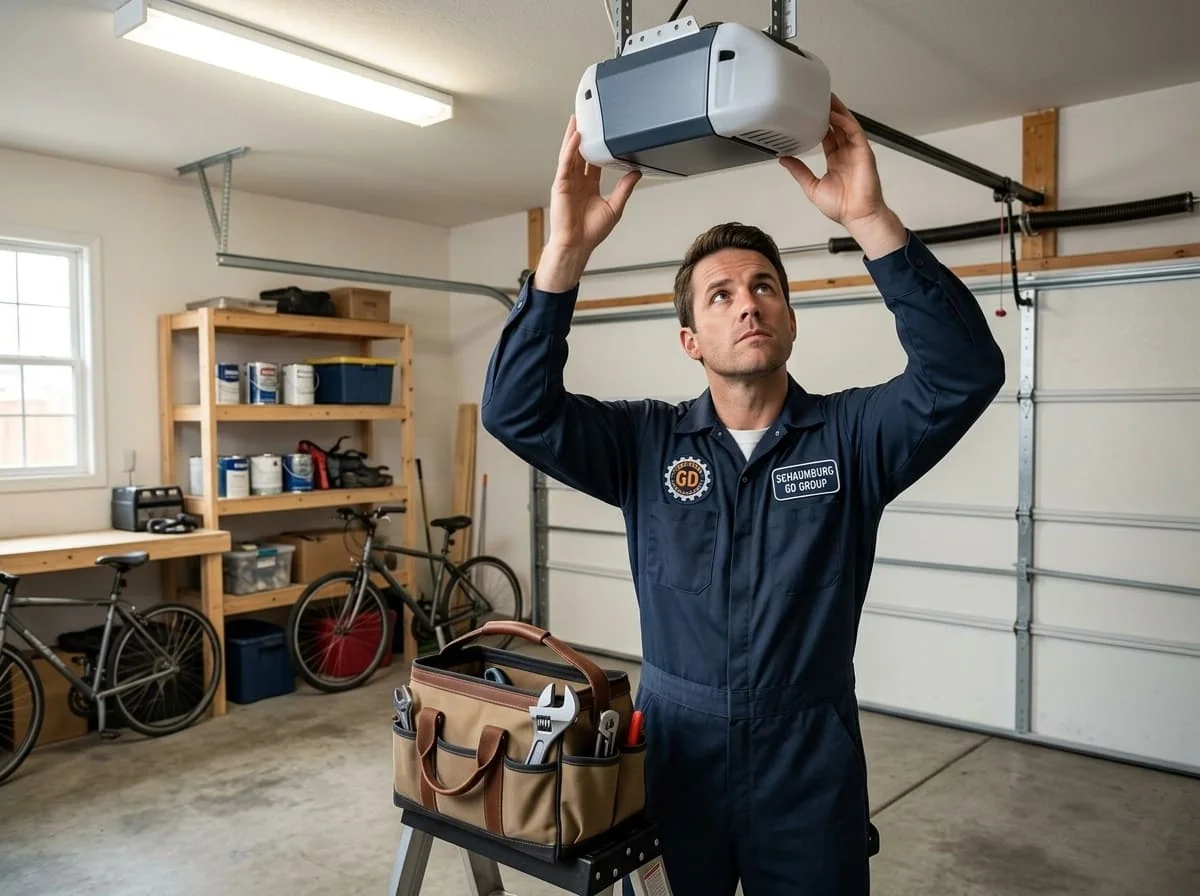
If the sensors check out and the door still won't complete a close cycle, the next thing I look at is the mechanical path the door actually travels. A door doesn't need much of an obstruction to trip its safety reversal - a roller that's started binding, a track that's picked up a dent, or debris that's worked its way into the track can all cause the door to stop partway and reverse rather than force through.
With the door open, I run a hand along both tracks checking for anything that shouldn't be there - a stray screw, built-up grime, a chunk of gravel that got kicked in. I also watch the door through a slow manual cycle (opener disconnected) looking for any point where it hesitates, binds, or where one side visibly lags the other. Uneven travel almost always means something is fighting the door on one track, whether that's a bent section or a roller that's worn enough to catch rather than roll smoothly.
This is also where I check the bottom weatherstripping and the floor it's meeting. In colder months, a ridge of ice or a chunk of frozen debris on the garage floor can be enough to stop the door a half-inch short and trigger a reversal, which reads to the homeowner as "it just won't close" when the actual problem is sitting on the concrete. If you're finding a genuine mechanical obstruction rather than debris, that usually points to track repair or, if a roller's the culprit, roller repair - both are things I'd rather diagnose in person than have a homeowner force through, since a door that's binding on a bent track can jump off entirely if you keep cycling it.
Step 3: Test the Close-Force and Travel Limits
If the sensors and the mechanical path both check out clean, the next suspect is the opener's own settings - specifically its travel limits and its close-force sensitivity. Every opener has to be told where "fully closed" actually is and how much resistance is acceptable before it decides something is blocking the door and reverses. When these get out of adjustment - which happens gradually as door weight shifts slightly with weatherstripping wear, spring tension drift, or after any opener work - the door can stop short of the floor every single time, or close and immediately reverse a couple of inches back up.
This is a case where I want to see exactly what the door is doing before touching any settings, because the fix depends entirely on the symptom:
- Door stops a consistent few inches above the floor and reverses - almost always a down-limit that's set wrong
- Door reaches the floor but immediately reverses back up - usually the force sensitivity is set too low and it's misreading normal floor contact as an obstruction
- Door behavior changes between cold and warm days - points to spring tension drift changing the amount of resistance the opener feels partway through travel
Limit and force adjustments are something a lot of manufacturers put small screws or a menu for right on the opener head, but I'd rather a homeowner not guess at these without understanding what's actually driving the symptom first, because a force setting that's cranked too high to "fix" a nuisance reversal turns a safety feature into a real entrapment hazard. If you've confirmed it's a limit or force issue and want it done right the first time, that's exactly the kind of call our opener repair technicians handle regularly.
Step 4: Inspect the Springs and Cables
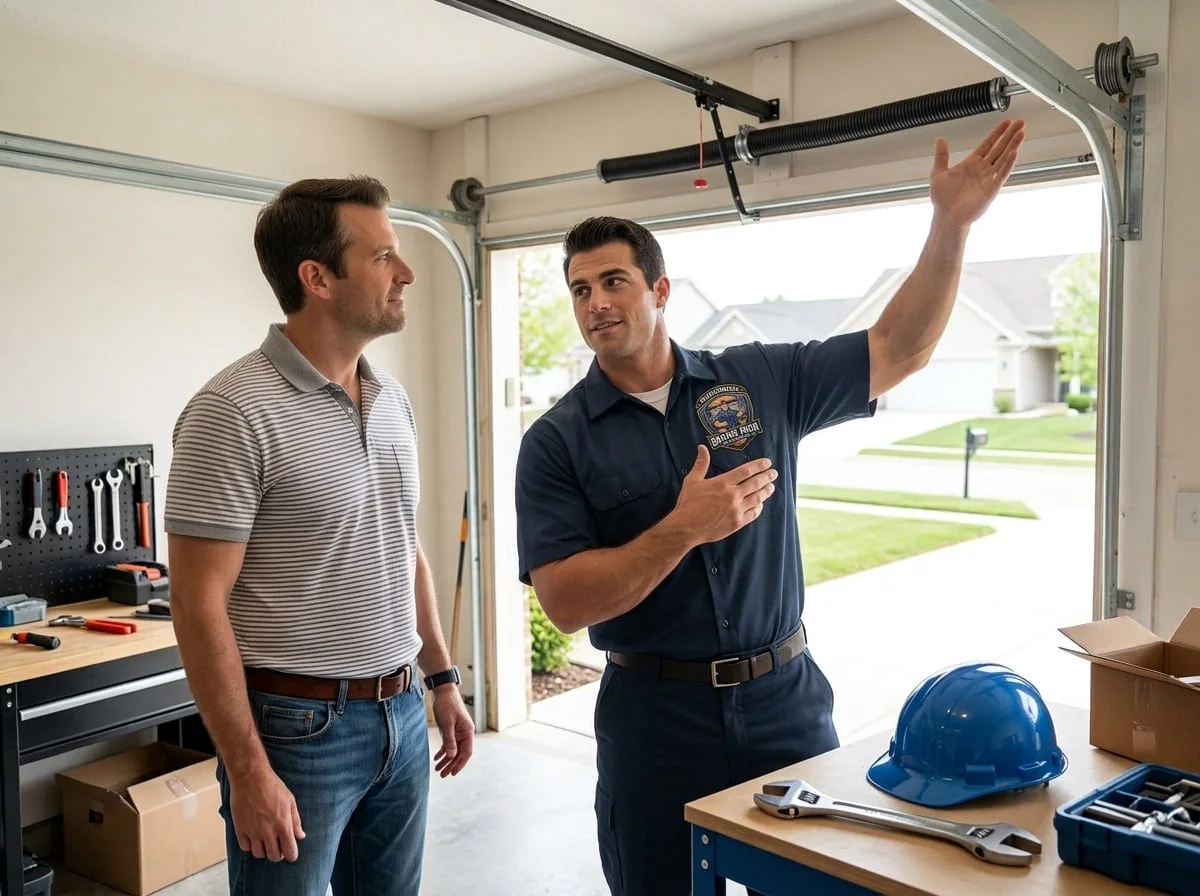
When a door won't close and none of the above explains it, I start looking at whether the door is properly balanced - meaning the torsion or extension springs are still doing their job of counteracting the door's weight. An opener is designed to move a balanced door with modest force; it was never meant to lift or lower a door's full weight on its own. When a spring has weakened or a cable has started to fray, the opener senses far more resistance than it should partway through the cycle and reverses as a protective response, even though nothing is technically blocking the door.
The tell here is usually in how the door behaves with the opener disconnected. With the emergency release pulled (opener manual disengage), a properly balanced door should stay roughly in place wherever you leave it and move up and down with light hand pressure. If it drops on its own, feels dramatically heavier than it should, or one side visibly sags lower than the other, that's a spring or cable problem, not an opener problem. I've covered why these fail more in cold weather in our post on why garage door springs break in winter, and the difference between the two spring types in torsion vs. extension springs.
I want to be direct about this one: do not attempt to test, adjust, or repair springs or cables yourself. Torsion springs in particular are wound under enough stored tension to cause serious injury if they let go while someone's working near them, and the U.S. Consumer Product Safety Commission has documented garage door springs and cables among the more frequent causes of home-repair injuries serious enough to need emergency treatment. This is a same-day call for us, not a weekend project - our spring repair and cable repair techs carry the tools to handle it safely in one visit.
Step 5: Rule Out the Wall Control and Remote
Occasionally what looks like a mechanical failure is actually a control problem - and this is the one step in the list that's genuinely simple and safe to check yourself before anything else. If pressing the wall button gives an inconsistent response, or the door behaves differently from the remote than from the wall station, I check a few things: battery level in the remote, whether the wall button's wiring has come loose or been nicked (common if anyone's hung anything on that wall), and whether the opener's logic board is throwing an error code on its diagnostic display, if it has one.
Most modern openers have a small light that blinks a specific number of times to indicate a fault code - that pattern is worth writing down before you call anyone, because it tells a technician immediately which system tripped rather than needing to walk the whole diagnostic tree again in person. If the wall control and remote both behave identically and the fault code (if present) points at the sensors, that loops right back to step one.
When the Door Closes, Then Reverses Partway
This specific pattern deserves its own note because it's different from a door that won't start closing at all. A door that begins its close cycle, gets partway down, and then reverses back up is almost always telling you one of two things: either something physically interrupted the beam or the travel path partway through (a sensor briefly blocked, a person or pet walking through), or the opener's force sensitivity is tuned too tight and it's reading normal mechanical resistance - like a slightly heavy spot in the door's travel - as an obstruction.
| Symptom | Most likely cause | Safe to check yourself? |
|---|---|---|
| Won't move at all, no sound | Power, wall switch, or remote battery | Yes |
| Starts down, reverses immediately | Blocked or misaligned safety sensor | Yes |
| Stops a few inches from floor every time | Down-limit setting | Check only, adjust with a technician |
| Uneven travel, grinding, or binding | Track or roller obstruction | Check only, no forcing |
| Door feels heavy or drops on its own when disconnected | Spring or cable failure | No - call a technician |
That table is the rough triage I use on the phone before a technician is even dispatched, so I know roughly what to expect and what parts might be needed on the truck.
When It's Time to Stop and Call a Technician
I'd rather a homeowner check sensors, clear an obstruction, and glance at a wiring connection than spend money on a visit for something that takes two minutes to fix. But there's a clear line where DIY needs to stop:
- If the door feels heavy, drops on its own, or one side sags when disconnected from the opener - that's spring or cable tension, and it's not a safe DIY area
- If you can see a bent track, a cracked panel, or a roller that's visibly worn through
- If adjusting the force setting yourself hasn't fixed a reversal problem after one or two careful tries - cranking it further is a safety risk, not a fix
- If the door has come partially off its track at any point, covered in more depth in our off-track repair page
We give a free upfront quote before starting any work, so calling to describe the symptoms costs nothing and usually saves a wasted trip either way - we can often narrow down the likely cause over the phone using the same sequence above. I still handle a lot of these calls myself, and every technician on my crew is trained to run through the same diagnostic order, so you'll get a consistent answer whoever picks up.
A Note on Winter Calls
I get a noticeable jump in "won't close" calls every year once temperatures drop into the 20s and below, which lines up with what the National Weather Service Chicago office in Romeoville tracks for the metro area's typical winter pattern. Cold makes steel springs stiffer and slightly change their effective tension, makes lubricant in rollers and hinges thicker and slower to respond, and turns any moisture on the garage floor into ice that can stop a door a half-inch short of full closure. If your door started acting up right after the first hard freeze of the season, that timing itself is a clue - it usually points toward balance or track issues rather than a sensor that just happened to fail on the same week.
If you're in one of Schaumburg's older subdivisions like Weathersfield, where a lot of original garage door hardware from decades back is still in service, cold-weather stress on aging springs and track hardware is worth taking seriously before it strands a door open or shut on a night you actually need the car. Standards bodies like DASMA publish maintenance guidance specifically because these systems are engineered assemblies, not simple mechanical doors, and their technical data sheet on garage door safety covers exactly the kind of sensor and reversal-force logic this whole walkthrough is built around.
Craig Halvorsen
Owner and lead technician at Schaumburg Garage Door Repair Group, serving Schaumburg, IL since 2011.
FAQs
Why does my garage door start to close and then reverse back up?
This is almost always the opener's safety system responding to something - a blocked or misaligned photo-eye sensor, a brief obstruction in the door's path, or a force sensitivity setting that's reading normal resistance as an obstacle. Check the sensors first since that's the most common cause, then look at the mechanical travel path.
My garage door won't close but the light on the opener is blinking - what does that mean?
Most openers use a blinking light as a fault code, and the number of blinks usually corresponds to a specific issue like a sensor problem. Count the blinks and note the pattern before calling - it helps a technician diagnose the issue faster, sometimes even over the phone.
Is it safe to manually force my garage door closed if the opener won't do it?
No. If the opener is refusing to close, it's responding to something - a safety sensor, a mechanical obstruction, or a balance issue - and forcing the door by hand can make a track or spring problem significantly worse, or create a safety hazard if a spring or cable is already compromised.
Can cold weather really cause a garage door to stop closing?
Yes. Cold makes springs and cables behave differently, thickens lubricant on rollers and hinges, and can leave ice on the garage floor that stops the door short of full closure. We see a real increase in this exact call every year once temperatures drop hard in the Chicago area.
How do I know if it's the sensors or the springs causing my door not to close?
Check the sensor LEDs first and clear anything between them - that resolves the majority of these calls. If sensors check out clean, disconnect the opener and see if the door feels heavy or drops on its own; if it does, that points to springs or cables, which need a technician, not a DIY fix.
Do you charge for a service call if it turns out to be something simple like a blocked sensor?
We give a free upfront quote before any work starts, and a lot of these calls get partially diagnosed over the phone first using the same sequence in this article, so you're not paying to find out it was a box in front of a sensor.
Have a Garage Door Problem Right Now?
Skip the guesswork — call Schaumburg Garage Door Repair Group for a fast, honest diagnosis.