Why Garage Door Springs Break in Winter
Cold weather doesn't wear out a garage door spring on its own, but it's almost always the thing that finishes the job. Here's the actual mechanism behind winter spring failure and what you can do about it before it happens on the coldest morning of the year.
The Phone Call I Get Every January
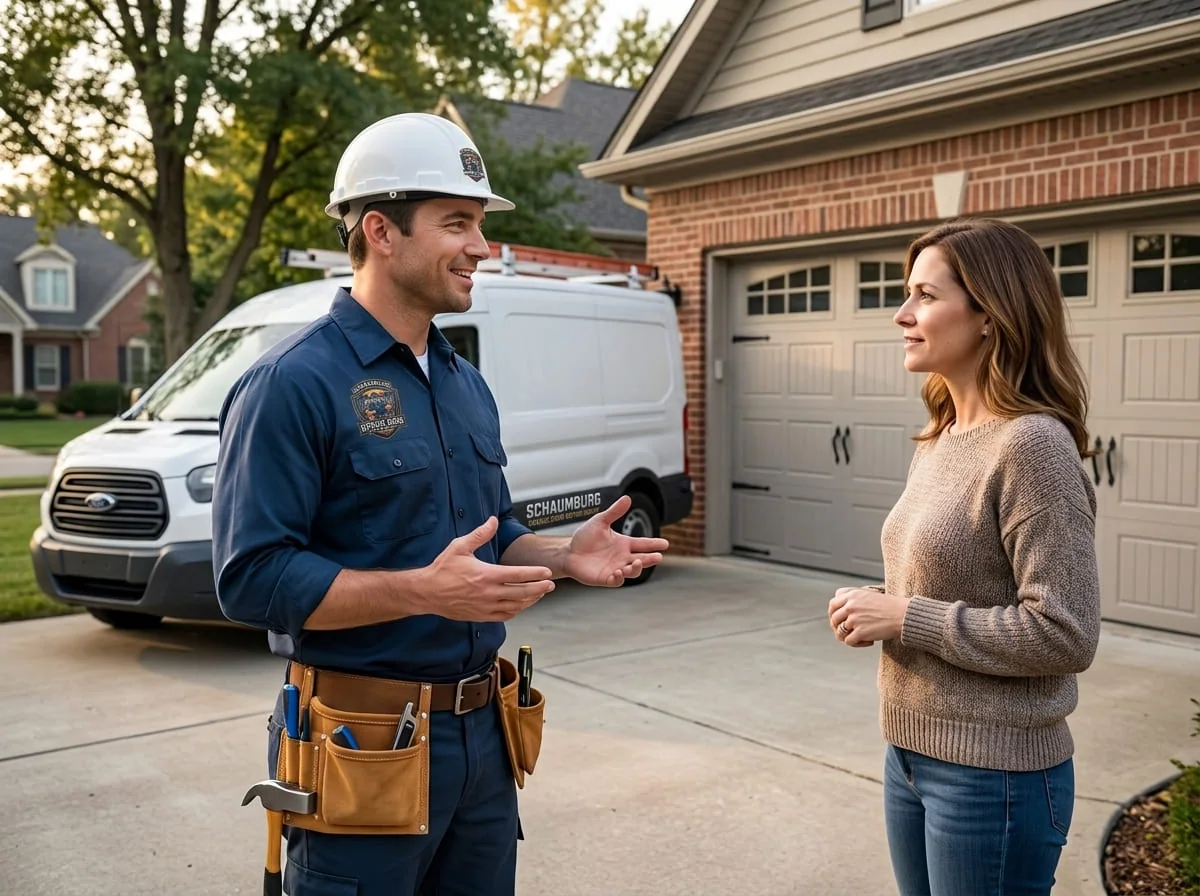
I can set my watch by it. The first hard cold snap of the year hits Schaumburg, temperatures drop into the single digits or below zero overnight, and my phone starts ringing with the same story: a loud bang from the garage around 6 a.m., and now the door won't budge or it's hanging crooked with one side sagging lower than the other. Almost every time, it's a broken torsion spring or extension spring, and almost every time the homeowner asks me the same question: "Did the cold do this?"
The honest answer is more interesting than a simple yes. Cold weather doesn't wear out a spring. What cold weather does is take a spring that was already most of the way through its working life and give it the final push. After fifteen years of doing this work out of our shop on Lunt Ave, I've pulled apart enough broken springs to know the pattern cold and hot climates both produce, and why our stretch of the Chicago suburbs sees more winter failures than almost any other season.
What's Actually Happening Inside a Spring
A garage door spring, whether it's a torsion spring mounted on a bar above the door or a pair of extension springs running along the horizontal tracks, does one job: it stores mechanical energy by being wound or stretched, then releases that energy to help lift a door that can easily weigh 130 to 400 pounds depending on the material and size. Every time the door opens and closes, the spring's steel coils flex through a full cycle of tension and release.
Steel is remarkably good at handling this kind of repeated flexing, but it isn't infinite. Manufacturers rate springs in cycles, with one cycle counting as one full open-and-close of the door. A standard-grade spring is typically built for somewhere in the range of 10,000 cycles, while a higher-cycle spring can be rated for 20,000, 30,000, or more. If your household opens the garage door four times a day, that's roughly 1,460 cycles a year, which puts a standard spring somewhere around its seventh year of expected life. Multiple daily drivers, a home gym in the garage, or a teenager who's in and out constantly all shorten that timeline.
The Door and Access Systems Manufacturers Association publishes cycle-life testing standards that most quality springs on the market are built and tested against, and that testing methodology is a big part of why I always recommend homeowners ask what cycle rating a replacement spring carries rather than just accepting whatever's cheapest.
Why Chicago-Suburb Winters Are Especially Hard on Springs
Cold metal is less flexible than warm metal. Steel contracts as the temperature drops, and that contraction makes an already-fatigued spring slightly stiffer and more brittle right at the moment it's being asked to do the same amount of work it did in July. According to the National Weather Service Chicago office, which covers the entire Schaumburg and greater Chicago metro forecast area, our winters routinely swing from unseasonably mild days into single-digit or sub-zero overnight lows within the same week, sometimes the same 24 hours. That freeze-thaw whiplash is worse for a spring than a steady deep freeze would be, because the metal is constantly expanding and contracting rather than settling into one state.
Add in road salt and moisture tracked in from the driveway, which accelerates surface rust on unlubricated coils, and an unheated garage that can sit well below freezing for weeks at a stretch, and you've got a near-perfect setup for a spring that was already near the end of its cycle life to finally give out. I see the same pattern in older Weathersfield homes with original 1960s-era garages that were never insulated or updated, where the springs are working harder against colder average temperatures than a newer build a few miles away.
Metal Fatigue, Not Cold, Is the Real Cause
I want to be direct about this because I think a lot of homeowners walk away from a bad experience blaming the weather when the real issue is maintenance and age. A spring that's properly lubricated, correctly sized for the door's weight, and within its rated cycle life will get through a Chicago winter without incident in the overwhelming majority of cases. What actually breaks springs in winter is the combination of:
- Age and cycle count. A spring nearing the end of its 10,000-cycle rating is a ticking clock regardless of season.
- Dry, rusted coils. Lack of lubrication increases friction between coils on every cycle, accelerating wear.
- Incorrect spring sizing. A spring that was undersized for the door's actual weight during a prior installation is already working overtime year-round.
- Sudden low-temperature stress. The final factor that turns "about to fail" into "failed this morning."
Cold is the trigger, not the cause. That distinction matters because it tells you where to actually put your effort: maintenance and timely replacement, not trying to somehow keep your garage artificially warm.
Warning Signs Before a Spring Lets Go
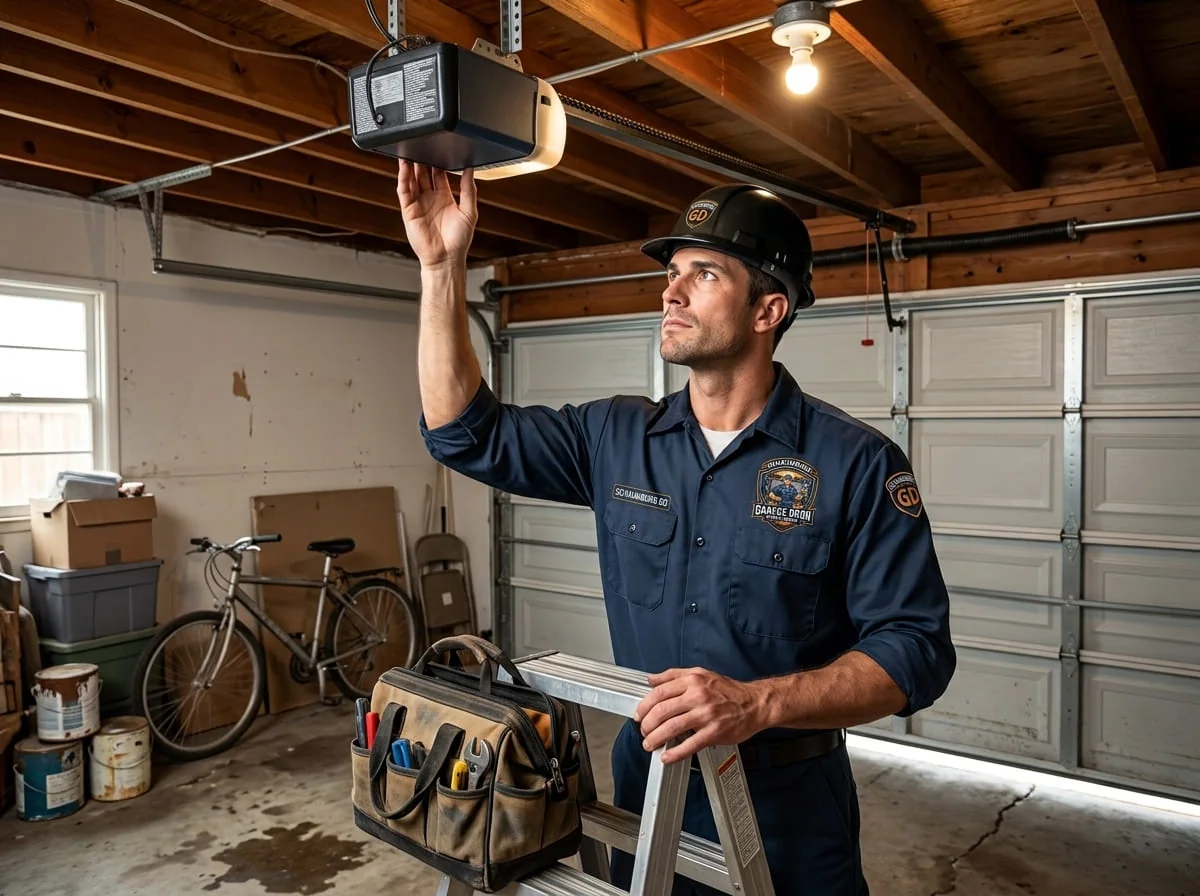
Springs rarely fail with zero warning, even though it feels sudden when it happens. In my experience, these are the signs worth paying attention to in the weeks leading into the coldest stretch of winter:
- The door feels noticeably heavier than usual when lifted manually (test this with the opener disconnected).
- A visible gap opens up in one of the coils of a torsion spring - a healthy spring's coils sit tight against each other.
- The door opens unevenly, faster on one side, or looks slightly crooked when partially open.
- You hear a new creaking or grinding sound specifically from the spring area, not the rollers or track.
- The opener seems to be straining more than usual, or you hear it laboring on lift.
Any one of these is worth a look before the temperature drops further, not after.
What to Do the Moment a Spring Breaks
If you hear that bang and the door won't move, the most important thing is what you don't do. Don't try to force the door open or closed manually, and don't let the automatic opener keep trying to power through it. A broken torsion spring means the door has lost most or all of its counterbalance, so the remaining weight is being carried by the cables, the track, and whatever hardware is left holding things together. I've seen a stressed cable snap under that extra load and whip loose, which is a genuine safety hazard, not just an inconvenience.
Leave the door where it is, disconnect the opener if you can do so safely by pulling the manual release cord, and keep the area clear. This is exactly the kind of failure our broken spring repair line of work exists for, and if it happens on a morning you need the car out for work or school, our emergency garage door repair scheduling is built around getting a technician out same-day where the day allows. The U.S. Consumer Product Safety Commission has documented the real injury risk tied to garage doors and their spring systems for exactly this reason - these are high-tension components, and a DIY spring replacement is one of the few jobs in this trade I actively discourage homeowners from attempting themselves.
Cutting Your Winter Failure Risk
None of this is complicated, and most of it takes fifteen minutes a couple times a year. Here's what I'd actually do if this were my own garage:
- Lubricate the springs with a garage-door-specific silicone or lithium-based lubricant before the first hard freeze, not a household oil that attracts dust and grit.
- Check the balance by disconnecting the opener and lifting the door halfway manually - it should stay in place. If it drops or shoots up, the spring tension is off and needs professional adjustment.
- Inspect the coils visually once a season for gaps, rust, or visible wear at the winding cone.
- Know your door's age. If the springs haven't been replaced in seven-plus years of regular use, budget for it before winter rather than after a failure strands you.
- Keep a full maintenance routine rather than treating springs in isolation - rollers, hinges, and track condition all affect how hard the spring has to work.
I put a full seasonal walkthrough together in our garage door maintenance checklist post if you want the complete routine beyond just the springs.
Torsion vs. Extension: Does the Type Matter in Winter?
I get asked this a lot, usually by a homeowner standing in their garage looking at a spring for the first time in years, unsure what they're even looking at. Both torsion springs (mounted horizontally on a bar above the door) and extension springs (running along the horizontal tracks on either side) are subject to the same cold-weather fatigue mechanics described above, but they fail differently and carry different safety implications when they do. I've written a full comparison in our torsion vs. extension springs post that goes through cycle life, cost of replacement, and which one is more common in the door styles typical of Schaumburg-area homes. If you're not sure which type you have, that's a good next stop.
When to Call a Professional
A broken spring is not a project for a Saturday afternoon with a wrench you found in the garage. The tension involved, even in a residential torsion spring, is enough to cause serious injury if the winding bars slip or the cone isn't seated correctly, and getting the spring size wrong leaves you right back where you started, just with a shorter runway before the next failure. Our crew handles this daily and every quote starts with a free upfront look at the actual door, not a guess over the phone. If you're hearing new noises, seeing an uneven door, or you already know your springs are past due, get in touch with us before the next cold snap does the deciding for you.
Craig Halvorsen
Owner and lead technician at Schaumburg Garage Door Repair Group, serving Schaumburg, IL since 2011.
FAQs
Can cold weather alone break a healthy garage door spring?
It's rare. A spring that's properly lubricated, correctly sized, and still within its rated cycle life will typically handle even a hard Chicago-area cold snap without failing. Winter failures almost always involve a spring that was already fatigued from age or lack of maintenance - the cold is the final trigger, not the underlying cause.
How long do garage door springs typically last in Schaumburg's climate?
Most standard-grade springs are rated for around 10,000 cycles, which works out to roughly seven to ten years for an average household. Homes with an unheated garage, more frequent daily use, or older original springs from a 1960s or 1970s build tend to see failures on the earlier end of that range.
Is it safe to lift a garage door manually after a spring breaks?
I don't recommend it. Once a spring breaks, the door's weight is no longer properly counterbalanced, which puts extra strain on the remaining cables and hardware. Leave the door in place, disconnect the automatic opener if you can do so safely, and have it inspected before attempting to move it.
Should I replace one spring or both at the same time?
If your door runs on a two-spring torsion system, I generally recommend replacing both together even if only one has broken, since the surviving spring has typically gone through the same cycle count and climate stress and is usually not far behind. It also keeps the door balanced evenly on both sides going forward.
Does an insulated garage help prevent winter spring failure?
It can help somewhat by reducing the severity of temperature swings the spring's coils experience, but insulation is a secondary factor compared to the spring's age, lubrication, and cycle count. A well-maintained spring in an unheated garage will usually outlast a neglected one in a heated space.
What's the first sign that a spring is about to fail?
The most common early sign is the door feeling noticeably heavier when lifted manually with the opener disconnected, along with a visible gap opening up between coils on a torsion spring. Uneven opening, new creaking near the spring, or an opener that seems to be straining are all worth acting on before the cold sets in further.
Have a Garage Door Problem Right Now?
Skip the guesswork — call Schaumburg Garage Door Repair Group for a fast, honest diagnosis.