Repair or Replace a Damaged Panel?
A cracked or caved-in garage door panel isn't always a simple swap. Here's how I decide, section by section, whether a single-panel repair holds up or the whole door needs to come off the track.
Why a Damaged Panel Is Never a Simple Question
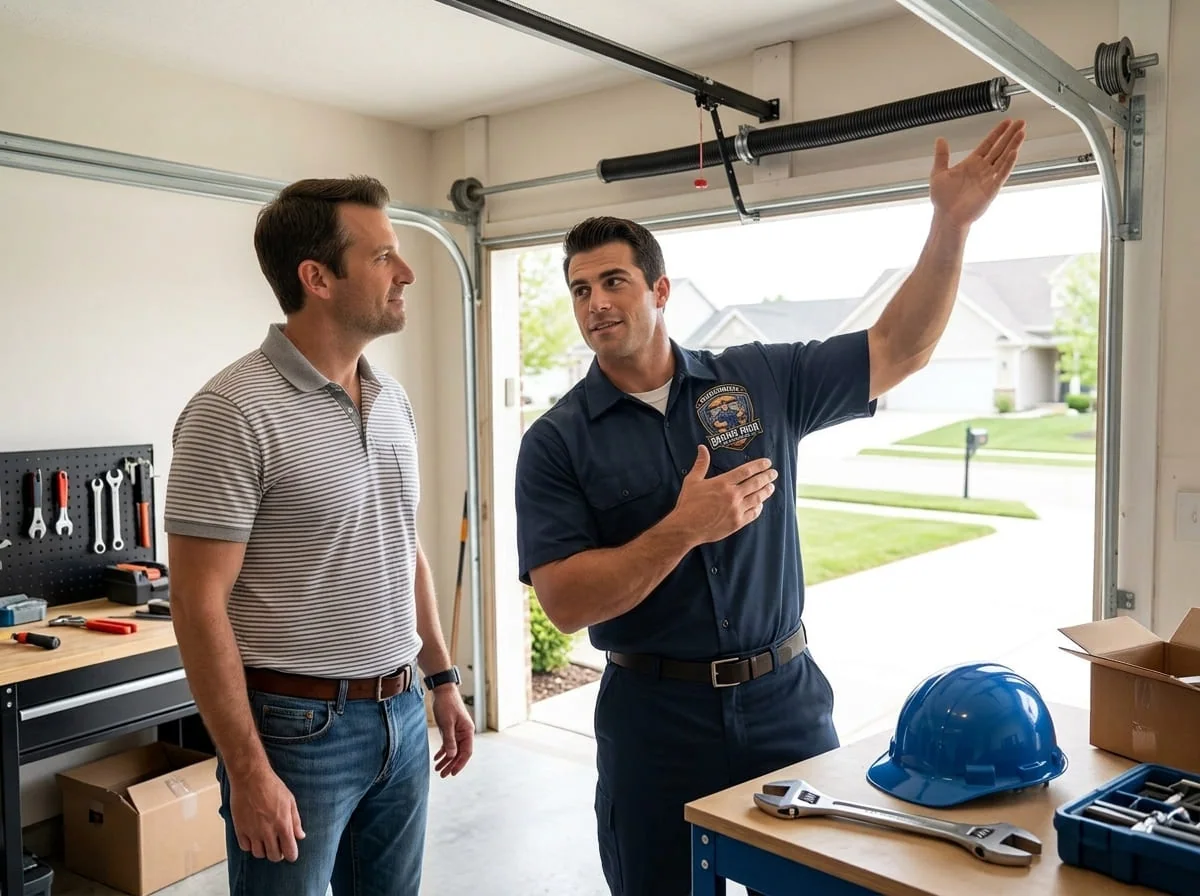
I get some version of this call every month, usually right after it happens. Somebody backed the car out a little too fast and clipped the bottom corner, or a wind-driven branch put a dent in the second section from the top, or years of lawn sprinkler overspray finally rotted through the bottom panel on an old wood-look steel door. The homeowner wants to know one thing: can you just replace that one panel, or does the whole door have to come out?
The honest answer is that it depends on more than the size of the dent. I've swapped a single section on a door and had it look and run like nothing ever happened, and I've had calls where a homeowner insisted it was "just one panel" and I had to tell them, standing in the driveway, that the smart move was a full door replacement instead. This guide walks through how I actually make that call, not a generic rule of thumb, so you can go into the conversation with your technician already knowing what questions matter.
How Sectional Doors Are Actually Built
Almost every residential garage door in Schaumburg is a sectional door — meaning the door is built from several horizontal panel sections, usually four to five on a standard-height door, hinged together and riding in a pair of vertical tracks on rollers. Each section is its own manufactured piece, with its own steel skin (or wood, fiberglass, or composite skin depending on the door), its own core insulation if the door is insulated, and its own set of hinge and roller brackets bolted to it.
That construction is exactly why panel repair is even possible in the first place — you're not cutting into one continuous surface, you're unbolting a self-contained section and bolting in a replacement. But it also means the replacement section has to match the original in width, height, insulation profile, and hardware hole spacing, or it won't sit flush with its neighbors and won't track properly. That matching requirement is the single biggest factor in whether a panel repair is realistic, and I'll come back to it.
When a Single-Panel Repair Makes Sense
A panel replacement is usually the right call when most of the following are true:
- The damage is isolated to one section. A single dent, a cracked skin, or localized rust-through that hasn't spread to the panels above or below it.
- The door still hangs and balances correctly. If I lift the door manually to the halfway point and it stays roughly where I leave it, the springs and cables are still doing their job and the frame geometry hasn't shifted.
- The section is still available. Doors built in the last several years from a manufacturer still supplying that door line usually have matching sections available. Older or discontinued lines are the sticking point — more on that below.
- The rest of the door is in good working order. Rollers rolling smoothly, tracks straight, weatherstripping intact, opener running quietly. If the door was otherwise healthy before the impact, a section swap gets it back to that same healthy state.
When those boxes check out, a panel replacement is genuinely the more sensible repair — there's no reason to replace four good sections to fix damage confined to one.
When Panel Damage Means the Whole Door Should Go
On the other hand, I steer people toward a full replacement when I see any of these:
- Damage spans two or more sections, especially adjoining ones — a hard enough impact to crease one panel often stresses the hinge points on the panel next to it too, even if that damage isn't obvious yet.
- The door is visibly out of square or racked after the impact, meaning the frame or tracks took the hit along with the panel. A new section bolted into a racked door won't sit right no matter how good the match is.
- The door is old enough that the section is discontinued. I've had doors where the section itself simply isn't manufactured anymore, and the closest match available is close enough to see the difference in color, texture, or panel profile from the driveway. Some homeowners are fine with that mismatch on a door they plan to repaint or replace eventually. Most aren't.
- The damaged section is insulated and the rest of the door isn't the same age or R-value class. Mixing an older, lower-insulation section into a door where the rest was upgraded (or vice versa) creates an uneven thermal profile — I get into R-values more in our post on insulated doors and Illinois winters, but the short version is a mismatched panel can undercut the whole door's performance.
- This is the second or third time you've called about door damage. If a door keeps getting dinged because of a tight driveway angle, a low garage ceiling clearance, or an opener that's been mis-adjusted for years, patching the panel again just resets the clock until the next hit. At that point it's worth talking through a full new door installation that better fits how the space actually gets used.
What Happens If You Just Leave It
Some homeowners ask if they can just leave a dented panel alone since the door still opens and closes. Cosmetically, sure, that's a personal call. Functionally, it's worth knowing what a damaged panel is quietly doing to the rest of the door.
A caved-in section changes the door's overall rigidity right at that point, which puts uneven load on the rollers and track at that height every time the door cycles. Over months, that shows up as a roller wearing unevenly, a track edge burring, or the door starting to bind partway through its travel — which then puts extra strain on the opener motor and the springs, since they're now working against friction that wasn't there before. A cracked panel that's let moisture in behind the skin can also start rusting the internal frame from the inside, which you won't see until it's much further along.
There's also a genuine safety angle. The Consumer Product Safety Commission has documented garage doors as a recurring source of home injuries, largely tied to doors that aren't properly balanced, sensored, or maintained — a structurally compromised panel is one more variable working against a door staying predictable under load. I'd rather a homeowner get an honest read on a dented panel now than have it turn into an emergency call six months later when the door won't move at all.
What I Actually Check on a Panel Damage Call
When I get out to a house for a damaged panel, here's roughly what I'm running through before I give a recommendation:
- I check the door's balance and travel by hand with the opener disconnected, to see whether the springs and cables are still carrying the door correctly.
- I run a straightedge and eye down both tracks looking for bends, gaps, or pulled-away brackets near the damaged section.
- I check the hinges immediately above and below the damaged panel — these take the brunt of an impact even when the panel itself absorbed most of the visible damage, and a bent hinge plate is a common piece of hidden damage.
- I look at rollers on both sides of the affected section for flat spots or cracking, since a jolt hard enough to dent steel is hard enough to stress a nylon or steel roller too.
- If the door is insulated, I check whether I can still get a matching insulated section for that model, and if not, what the visual and thermal difference would look like against the rest of the door.
- I check the door's overall age and condition — rollers, cables, weatherstripping, opener — because a panel repair on a door that's otherwise near the end of its service life is a different conversation than a panel repair on a five-year-old door that's in great shape everywhere else.
I always give a free upfront quote either way, showing exactly what a section replacement would run against what a full door replacement would run, so the homeowner is deciding with real numbers on the table rather than guessing.
The Matching Problem: Why This Gets Harder With Age
The single biggest reason panel repairs stop being realistic isn't the damage itself — it's availability. Door manufacturers update their panel profiles, textures, and window layouts over time, the same way any manufactured product line evolves. A door installed ten or fifteen years ago may have a panel groove pattern, embossing depth, or window insert style that simply isn't produced anymore in that exact form.
When that happens, I can usually source something close, but "close" means a visible seam of difference on the door for as long as you own it — a slightly different woodgrain texture, a marginally different panel width that throws off the reveal lines, or a color that's near but not identical once it's sat in the sun next to older, slightly faded panels. Some homeowners genuinely don't mind this, especially on a garage that isn't highly visible from the street. Others take one look and ask me to just handle a full replacement instead so the door reads as one consistent unit.
This is worth knowing before the damage happens, honestly — it's part of why I tell people that a door's age is a legitimate factor in a repair-versus-replace decision even when the damage itself looks minor.
A Straight Decision Checklist
Here's the short version I actually use, roughly in order of how much weight each factor carries:
| Factor | Leans toward repair | Leans toward replace |
|---|---|---|
| Number of damaged sections | One section only | Two or more, or adjoining sections |
| Door balance after impact | Still balanced, holds position when lifted | Feels heavy, drops, or won't hold |
| Tracks and frame | Straight, no visible racking | Bent track, racked frame, gapping |
| Section availability | Matching section still made | Discontinued, closest match is visibly different |
| Door age and overall condition | Newer door, otherwise in good shape | Older door already showing wear elsewhere |
| Repeat damage history | First time this has happened | Recurring dings from a clearance or angle issue |
No single row decides it on its own — it's the overall pattern that tells me which way to recommend going.
Craig Halvorsen
Owner and lead technician at Schaumburg Garage Door Repair Group, serving Schaumburg, IL since 2011.
FAQs
Can I replace just the bottom panel if it's rusted out but the rest of the door looks fine?
Often yes, and the bottom panel is actually one of the more common single-section replacements I do, since it takes the brunt of splash-back, road salt, and sprinkler overspray. The caveat is the same as any panel swap: I still check that the rest of the door is balanced and that a matching bottom section is available for that door line before recommending it over a full replacement.
Will a repaired panel match the color of the rest of my door exactly?
If the door is a current, actively produced line, usually very closely. If it's an older door, there can be a visible difference in shade or texture, especially once the existing panels have had years of sun exposure. I'll always tell you upfront if I think the match is going to be noticeable rather than let you find out after the work is done.
Is a damaged panel a safety issue or just cosmetic?
It depends on the damage. A shallow dent that hasn't affected the door's balance or track alignment is mostly cosmetic. A crack that's let moisture behind the skin, a dent near a hinge point, or damage that's thrown the door out of balance is a functional issue that can accelerate wear on rollers, cables, and the opener, and is worth having looked at rather than left alone.
How much does panel damage usually affect my garage door opener?
A damaged section that's changed how smoothly the door travels makes the opener work harder to pull the door through that spot, which can shorten the life of the motor and gears over time. If you're also noticing new grinding or straining sounds since the damage happened, it's worth having both the panel and the <a href="/services/garage-door-opener-repair/">opener</a> checked in the same visit.
Do you offer a free quote for panel repair versus full replacement?
Yes. I give a free upfront quote for both options on every panel damage call, so you can compare a single-section repair against a full door replacement side by side before deciding anything.
What if the damage is on a door I know is quite old?
That's usually the case where I lean toward recommending a full replacement rather than chasing down a matching section for a discontinued panel style. An older door is also more likely to have other components — rollers, cables, weatherstripping — nearing the end of their service life, so it's worth having the whole door assessed rather than just the damaged section.
Have a Garage Door Problem Right Now?
Skip the guesswork — call Schaumburg Garage Door Repair Group for a fast, honest diagnosis.